Two sculptural origami foxes, one scarlet and one ivory, connected by a folded red ribbon.

AI-FIRST DIGITAL AGENCY

Make your brand
an experience.

We turn campaign goals into interactive digital
experiences — from concept through production to launch.

Campaign concepts · Interactive experiences · Digital production

ESTABLISHED 2010 · SELECTED WORK

Explore our work
IMAGINATION, MADE TANGIBLE
ESTABLISHED 2010

Big brands.
Real project experience.

Selected brands from our project history.

SELECTED WORK

A brand. An idea.
A reason to take part.

From a coffee experiment to an Olympic challenge: projects built around what people can do, not just what they can see.

KFC / COFFEE CAMPAIGN

Wake up
the owl.

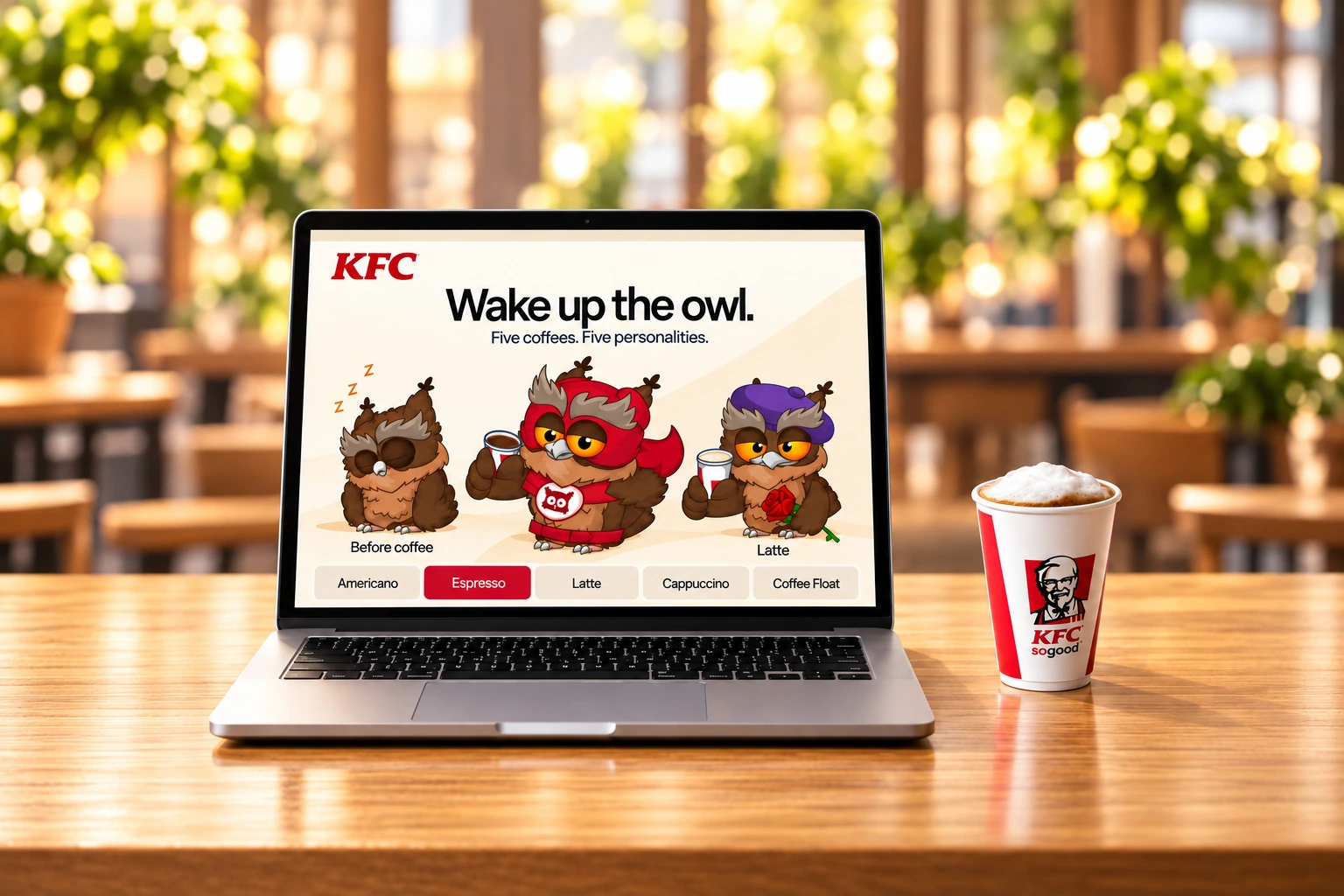
Five coffees. Five personalities. A playful product choice, brought to life online.

INTERACTIVE WEBSITE · ANIMATION · CAMPAIGN BANNERS Explore the project
A coffee campaign shown on a laptop: three owl moods, coffee choices inside the screen, and a separate cup on the table.
McDONALD’S / OLYMPIC FLAME

Every step
keeps the
story alive.

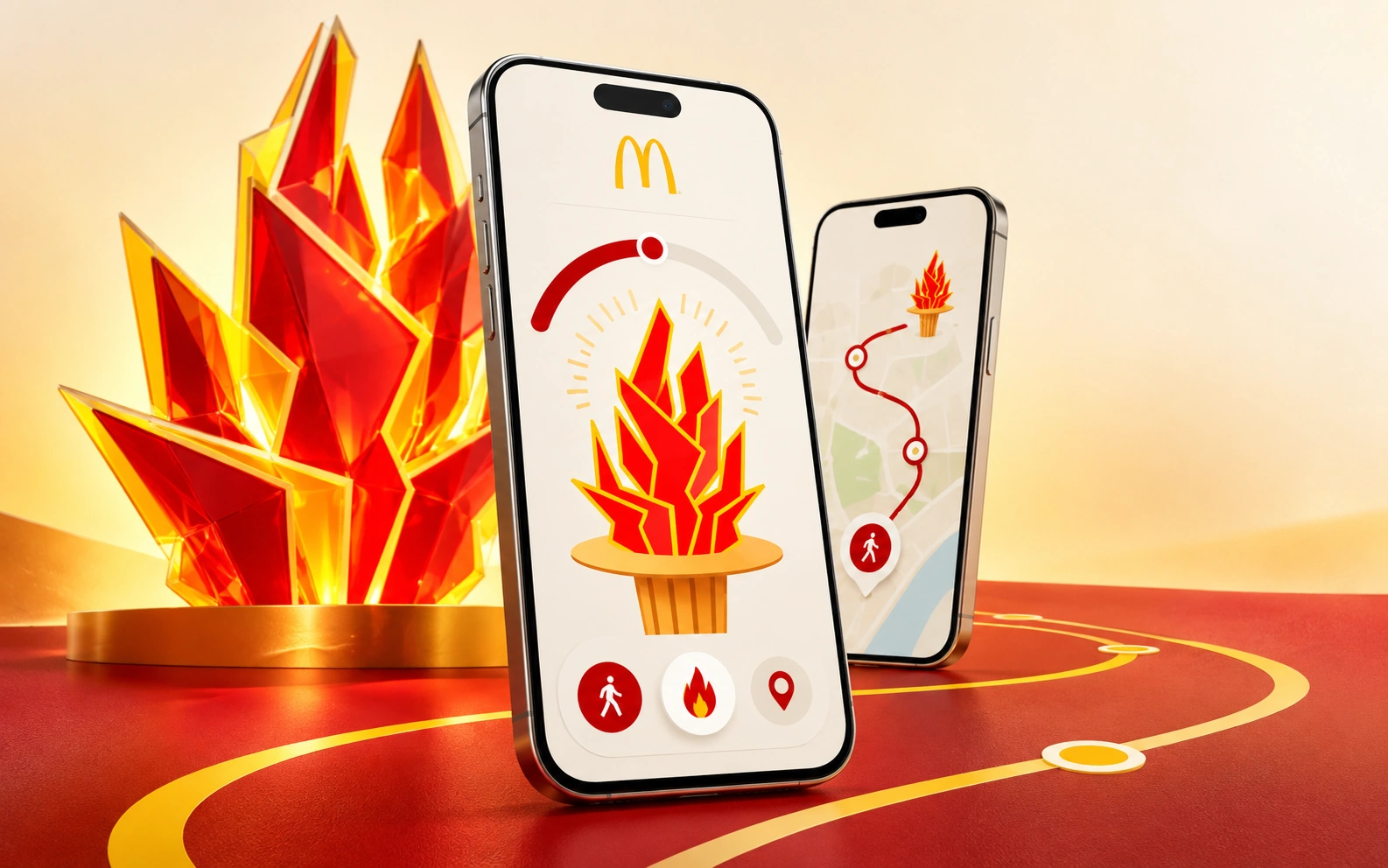
A mobile campaign people could move with. Everyday walking kept a virtual flame burning.

MOBILE APP · CAMPAIGN WEBSITE Explore the project
Two smartphones present the Olympic walking campaign, alongside a red and gold sculptural flame.
MORE PROJECTS, MORE WAYS TO TAKE PART

Explore all our work.

Social experiences, games, mobile applications and brand activations.

View all 8 projects

WHAT WE CAN MAKE TOGETHER

Give your audience
a reason to take part.

CHARGE is a fictional project illustrating a concept, game and website.

OrangeLimeGrapefruit

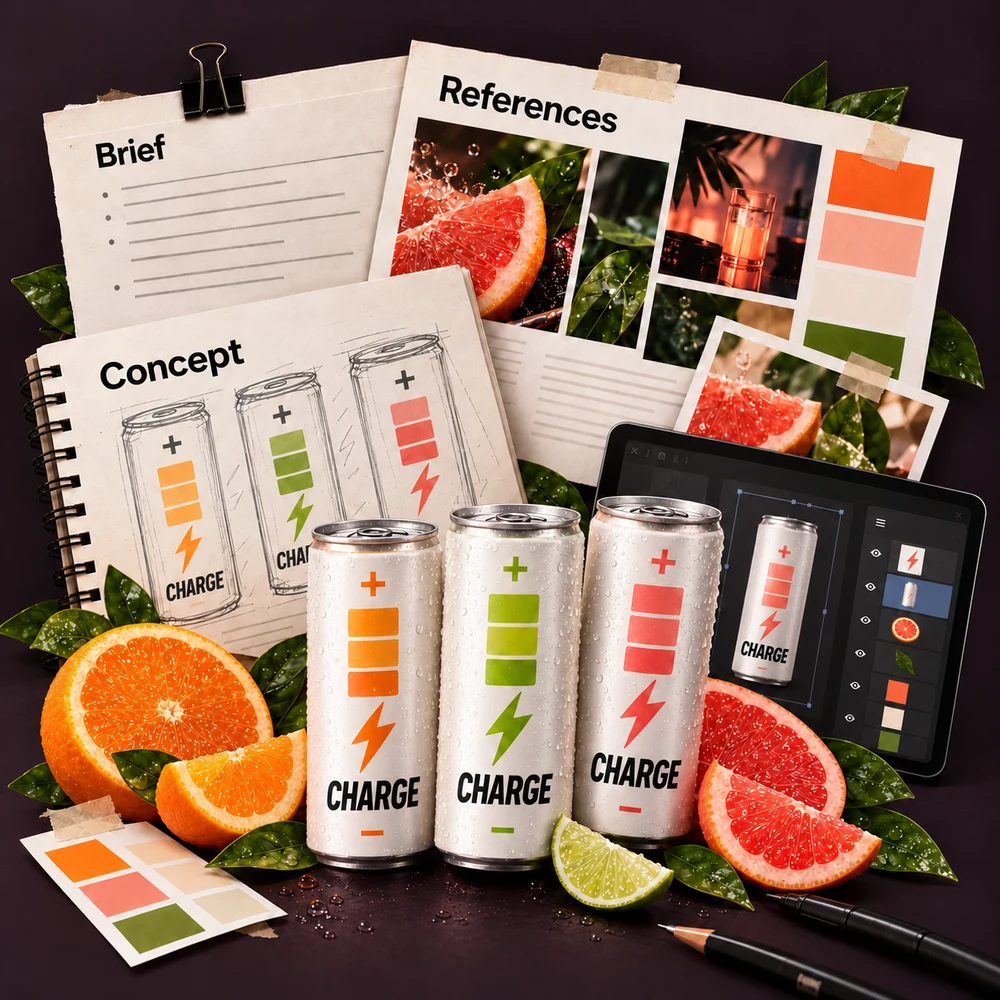
A brief, references, palette and sketches for three CHARGE battery-inspired cans: orange, lime and grapefruit.

Campaign ideas
and concepts

From your objective and brand materials to a campaign idea: research, references, a palette, sketches and an agreed concept.

You receive a concept ready to take into production.

From brief to concept
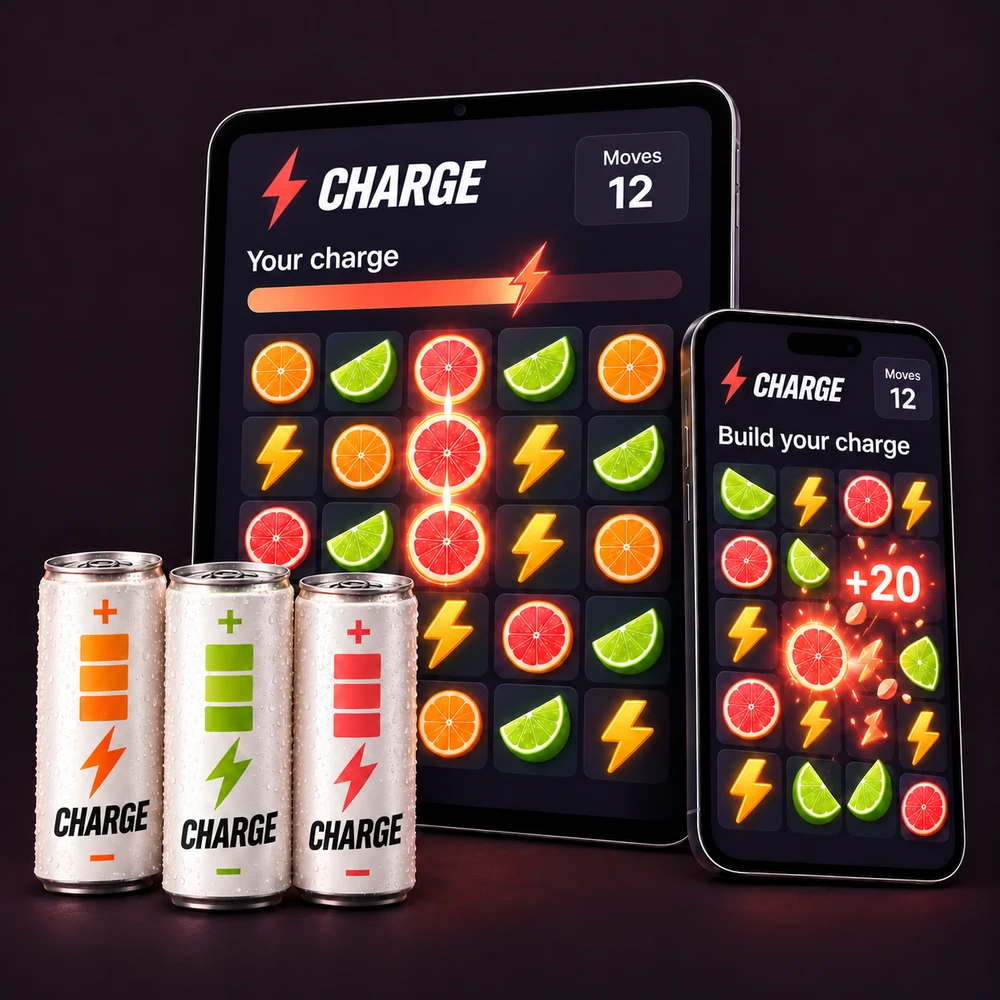
A match-3 citrus game on a tablet and phone, showing a highlighted combination, charge meter and move result.

Games and interactive
brand experiences

This example uses match-3: swap adjacent citrus pieces to make combinations and fill the charge meter.

Clear rules, feedback and a result for the participant.
Explore the game scenario
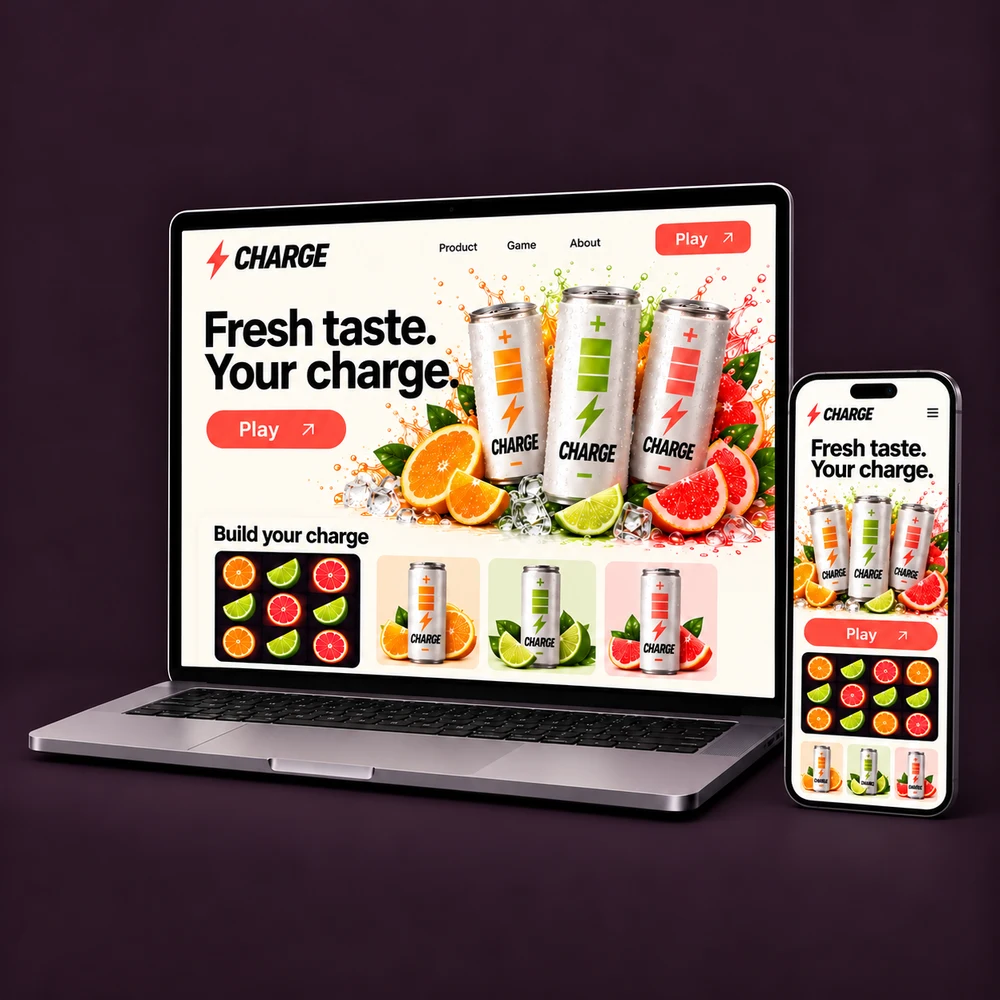
The fictional CHARGE product landing page on a laptop and phone, with a battery-inspired can, citrus flavours and a Play button.

Websites
and applications

A product, a clear offer and a next step. For CHARGE, a landing page invites people to play and explore the drink.

A considered journey from the first screen to the intended action.

From prototype to launch

One example connects the idea, mechanic and website. Your project may call for a different format: a quiz, competition, application or standalone campaign.

Discuss a project

HOW WE WORK

Creative ambition.
A plan to deliver it.

From the first conversation to handover. CHARGE illustrates what we do, what we agree and what you receive at each stage. We tailor the stages, deliverables and handover terms to the project.

A brief, references, palette and sketches for three CHARGE battery-inspired cans: orange, lime and grapefruit.

BRIEF / FICTIONAL EXAMPLE

CHARGE project brief

See the sample content
Objective
Introduce the energy drink through a digital brand experience.
Audience
Adults. Define the audience segment and channels before choosing the mechanic.
Materials
Packaging, product information, brand guidelines and campaign assets.
To confirm
Launch date, budget, desired action, approvers and technical constraints.
What goes into a brief

STAGE 1 OF 6

Understand the task first.

Start with a conversation, an email or a voice message. You do not need to turn your request into a technical specification before speaking to us.

What we do
Collect your input in the form that works for you. Review the product, audience, brand materials and previous campaigns. Separate confirmed requirements from questions still to be answered.
What we agree
The objective, audience, constraints, scope and approval process. Establish who makes decisions and when the result is needed.
What you receive
A concise brief, an inventory of source materials and a list of open questions. A shared starting point for the concept.
A brief, references, palette and sketches for three CHARGE battery-inspired cans: orange, lime and grapefruit.

CONCEPT / BEFORE PRODUCTION

Build your charge

See the sample content
Product
CHARGE: orange, lime and grapefruit energy drinks in battery-inspired cans. A fictional example.
Message
Fresh taste. Your charge.
Idea
Build a charge in a short game, then explore the product.
Materials
References, palette, packaging and screen sketches, and a description of the mechanic.
What a concept includes

STAGE 2 OF 6

Give the idea a clear purpose.

First, establish why someone would want to take part and how the experience serves the brand’s objective.

What we do
Research the audience and context, and gather references. Explore ideas, messages and mechanics; develop a palette, sketches and examples of use. Respect the brand guidelines, existing positioning and restrictions.
What we agree
The creative concept, key message, visual direction and participation mechanic. Reconcile feedback from different stakeholders into one agreed direction.
What you receive
A concept with its rationale, references, colour palette and sketches of key screens. Record the selected direction and what the next stage needs to test.
A match-3 citrus game on a tablet and phone, showing a highlighted combination, charge meter and move result.

PARTICIPANT JOURNEY / MATCH-3

The game scenario

See the sample content
Entry
Visit the product page and choose to play.
Action
Swap adjacent citrus pieces to make a line of three matching pieces.
Feedback
The match clears, the charge meter fills and the remaining move count decreases.
Result
See the result and a product card. Play again or explore the drink.
Describe scenarios and acceptance criteria

STAGE 3 OF 6

Test the participant’s journey.

Show what people will see, what they can do and what happens next, before committing to full production.

What we do
Describe user scenarios, map the flow and build a prototype. Check game rules, guidance, feedback, retry and the route to the product. Cover errors and limitations as well as the successful path.
What we agree
The journey from entry to the intended action, game rules and screen states. Check whether the task, controls and result make sense without the designer explaining them.
What you receive
User scenarios, a flow diagram, a prototype of key screens and a list of states. These guide design, development and acceptance testing.

PLAN / DEPENDENCIES / ACCEPTANCE

CHARGE launch plan

Before campaign production
Approve the concept, prototype and page content.
Before development
Approve requirements, integration owners and acceptance criteria.
Before media goes live
Test the completed experience on agreed devices and approve launch.
If an integration is needed
Describe the data, exchange format, access and behaviour when the service is unavailable.
Requirements and acceptance criteria

STAGE 4 OF 6

Agree the work before production.

A digital project has to fit the product launch and wider campaign. Check dates and dependencies before they put delivery at risk.

What we do
Align the project schedule with the product release, media bookings and other suppliers. Define scope, milestones and owners. Where a backend or data exchange is needed, agree APIs, formats, access and error handling.
What we agree
The estimate, schedule, technical requirements and acceptance criteria. Establish which data is necessary, who is responsible for it and where each supplier’s scope begins and ends.
What you receive
A dated plan with owners, requirements, integrations and readiness criteria. Record changes to scope and timing instead of leaving them scattered across messages.
The fictional CHARGE product landing page on a laptop and phone, with a battery-inspired can, citrus flavours and a Play button.

TESTING / BEYOND THE FIRST SCREEN

Checks before acceptance

See the sample content
Controls
Piece selection, valid moves, guidance and retry.
Screens
Narrow phones, tablets, desktop and realistic text lengths.
Data
Agreed data exchange and clear feedback when a service fails.
Acceptance
Checks against requirements, an issue list and verification of fixes.
How to record changes

STAGE 5 OF 6

Build and test the whole experience.

Design, copy, animation and code need to work together. An attractive opening screen is only part of a finished project.

What we do
Create designs and production assets, then develop the interface and any agreed backend. Share work in progress. Test mobile journeys, game states, loading, accessibility and data exchange.
What we agree
The completed version against the agreed criteria. Collect issues, set priorities and retest fixes, including their effect on working parts of the project.
What you receive
A version ready for acceptance, a record of checks and a clear issue status. Make the launch decision on the readiness of the complete user journey.

FILES / DOCUMENTATION / RESPONSIBILITY

The handover package

Materials
Source files, designs, copy and agreed exports.
Technical information
Build, deployment, integrations and known limitations.
Access and rights
Resource owners, required permissions and terms of use for assets.
After launch
Who maintains the project, how to report a problem and what support covers.
What to include in a handover

STAGE 6 OF 6

Hand over more than a link.

Agree in advance who hosts the project, who looks after it after launch and which materials the client receives.

What we do
Prepare hosting and the domain, verify live URLs and coordinate release with the campaign. Transfer source files, designs, documentation and agreed access. Record the support arrangements.
What we agree
The handover inventory, usage rights and responsibility for hosting and maintenance. Agree analytics, any required consent, the support period and its scope separately.
What you receive
The live project and a handover package: source files, build and deployment instructions, an access and licence inventory, and guidance for the next team.

Keep the meaning of your feedback.

Send an email, a document or a voice message. We consolidate comments, clarify contradictions and record the agreed decision.

Human decisions. Human responsibility.

AI helps explore options, build prototypes and prepare materials. People review the brief, brand fit, acceptance and final handover.

START WITH YOUR PROJECT

What would make
your audience join in?

Tell us about the product, the people and the result you want. Start with an idea, a message or a completed brief.